
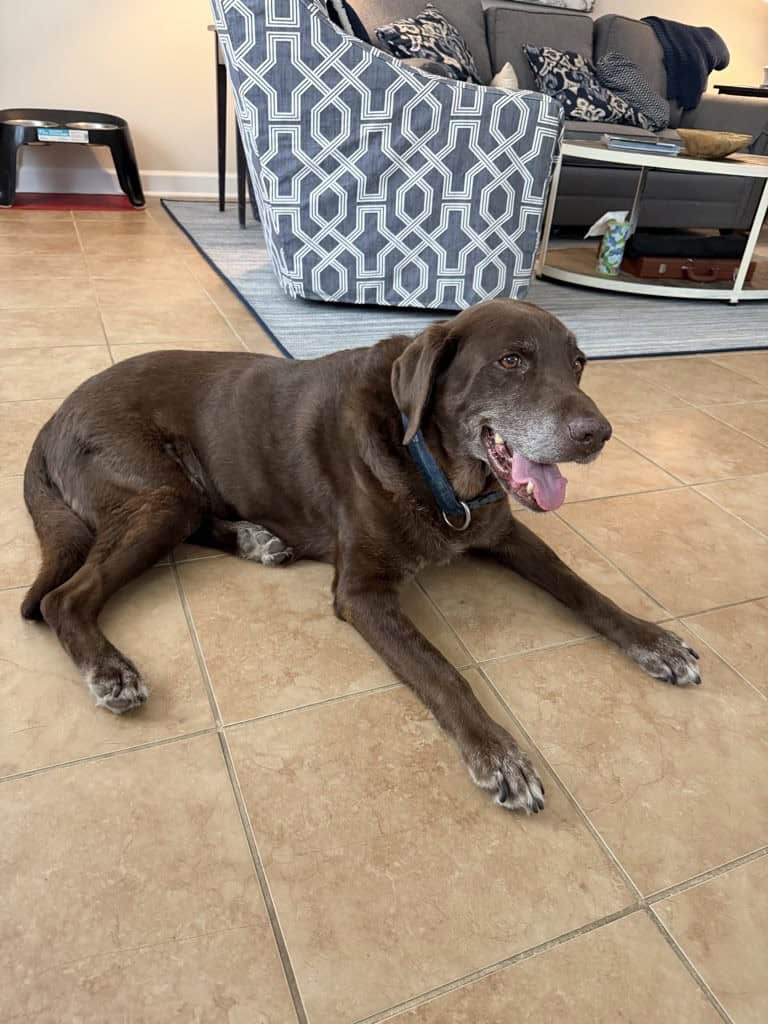
Is your dog bringing you toys after dinner, asking for another round of fetch, or dropping a tug toy at your feet just as the house begins to settle? Perhaps your dog paces from room to room, whines near the door, or asks to go outside and then spends the entire trip watching you instead of using the bathroom.
If you've been wondering, "Why is my dog restless at night," these behaviors often point to a day that lacked enough movement, stimulation, and interruption. When a dog spends most of the workday resting, the evening may arrive with energy still available and few satisfying ways to use it.
Many breeds were developed for movement, problem-solving, retrieving, tracking, herding, guarding, or close cooperation with people. Modern family life rarely asks dogs to perform those original jobs, but the underlying need for activity and engagement remains. A long workday can leave a noticeable gap in the routine, especially when the dog’s access to exercise, outdoor time, and interaction depends on the household schedule.
1. Nighttime Restlessness Begins Earlier in the Day
A restless evening usually makes sense when viewed as the final part of the dog’s day. The pacing, toy-carrying, repeated requests to go outside, and sudden interest in play may be the first meaningful activity the dog has had since morning.
Workdays often begin with a compressed routine. The dog goes outside, eats breakfast, and settles in while the household prepares to leave. Several quiet hours follow, and the next substantial interaction may not happen until everyone returns home.
By then, the people in the house are entering the most demanding part of their own day. Dinner needs attention, children need help, errands remain unfinished, and everyone is beginning to slow down. The dog, meanwhile, has spent much of the day resting and may be ready for movement precisely when the household is ready for stillness.
That mismatch can create a nightly pattern. The dog becomes more active, the family tries to settle the dog quickly, and the evening turns into a negotiation over toys, doors, walks, and attention.
A better daytime rhythm often changes the tone of the evening. The goal is a day with enough structure that the dog reaches bedtime after several appropriate periods of activity rather than one long stretch of inactivity followed by a late burst of energy.
2. Why Weekends Feel Different to Your Dog
Dogs spend a large portion of the day sleeping, including dogs who receive regular exercise. Sleep itself does not signal a problem. The difference between a weekday and a weekend often lies in the small events that interrupt that sleep.
On a weekend, your dog may follow you into the kitchen, spend a few extra minutes in the yard, join you for a short drive, greet someone at the door, or receive a few spontaneous moments of play. None of these activities may feel important enough to register as a major part of your day. Together, they create a very different experience for the dog.
A short lunch break offers a useful comparison. Fifteen or twenty minutes away from a desk can restore focus, change your mood, and make the afternoon feel more manageable. The break occupies only a small part of the day, yet its effect can extend well beyond those few minutes.
Dogs benefit from similar interruptions. A walk around the block, time to investigate the yard, or a brief play session creates a distinct transition in the day. The dog moves, observes, interacts, and then returns to rest with a clearer division between morning and afternoon.
When the weekend ends, those small transitions often disappear. Monday becomes a much quieter day, even when the dog sleeps for roughly the same number of hours. The loss of interaction, outdoor time, and sensory variety can become visible later in the evening. Dogs can respond to other disruptions in routine in similar ways, including after their family returns from a trip. If your dog seems unusually distant after travel, our article on why your dog may appear to ignore you after vacation explains what may be happening.
3. A Midday Walk Engages More Than the Body
A dog walk provides physical movement, but its value extends well beyond exercise. Dogs gather much of their information about the world through scent, and a walk gives them access to an environment that changes constantly.
A patch of grass may carry information about other dogs, wildlife, people, weather, food, and recent activity in the neighborhood. A tree, fence post, curb, or garden bed can hold layers of scent that humans never notice. When a dog pauses to investigate, the dog is actively processing the environment.
That is why a slower, sniff-heavy walk can be deeply engaging even when it covers less distance than a brisk march around the neighborhood. The dog is moving while also making choices, following scent trails, and taking in new information.
A midday dog walking visit also provides a reliable bathroom opportunity. That matters for comfort, particularly when the time between morning and evening stretches across a full workday. After the bathroom break, the visit can include a walk, a play session, or another form of activity suited to the dog’s age, energy level, and routine.
The combined effect is substantial. The dog receives movement, sensory engagement, outdoor access, and human interaction within one structured part of the day. Afterward, many dogs return home ready to rest through the afternoon rather than carrying the entire day’s unmet activity into the evening.
4. How a Dog Walker Near You Creates a Better Weekday Rhythm
A dog walker can become one of the fixed points in a dog’s weekday schedule. The visit divides a long day into manageable parts and gives the dog a predictable period of outdoor time, movement, and interaction.
Consistency is what makes the visit especially valuable. A recurring midday walk establishes a rhythm the dog can recognize. Morning activity leads into a period of rest, the walker arrives during the middle of the day, and the dog returns home for another period of rest before the family comes back.
That structure supports calmer evenings because the day contains more than one meaningful activity window. The dog has already had an opportunity to move, sniff, use the bathroom, and engage with another person. The family can then enjoy the evening without carrying the entire responsibility for the dog’s daytime needs into the final hours of the day.
A dog walker near you also brings practical advantages. Local coverage supports more dependable scheduling, shorter travel between visits, and greater familiarity with neighborhood conditions. Traffic patterns, apartment access, gated communities, parking restrictions, weather, and local walking routes all affect whether a visit can happen smoothly inside a real workday.
The strongest weekday routines rely on reliability rather than intensity. A dog does not need to return from every walk exhausted. The visit needs to happen consistently, fit the dog’s needs, and create a clear break in the middle of the day.
For busy households, that kind of support protects both sides of the relationship. The dog receives a more complete daily routine, and the owner returns home without the pressure of making up for an entire day in a single evening.
5. When Nighttime Restlessness Deserves a Closer Look
Routine-related restlessness usually follows a recognizable pattern. It appears after long, quiet days and improves when daytime activity becomes more consistent. A sudden change in behavior deserves separate attention, especially when the dog appears physically uncomfortable.
Increased urination, loose stool, heavy panting during pacing, or repeated attempts to settle without finding a comfortable position can signal a medical concern. A dog who asks to go outside several times and urinates each time is showing a different pattern from a dog who steps into the yard and immediately begins seeking attention or play.
Behavior changes also matter when they emerge without an obvious change in schedule. A dog who previously settled easily and suddenly begins pacing, panting, waking throughout the night, or moving constantly from one resting place to another should be evaluated by a veterinarian.
Pay close attention to the full picture. Energy, appetite, bathroom habits, posture, breathing, and the dog’s ability to get comfortable provide useful context. Prompt veterinary guidance is appropriate when restlessness appears alongside physical symptoms or continues despite a more balanced daytime routine.
Better Nights Begin With a Better Day
Nighttime behavior often reflects the structure of the hours that came before it. A dog who spends the entire workday waiting for activity may reach the evening ready to begin just as the household is ready to stop.
A dependable midday walk changes the shape of that day. It provides a bathroom break, movement, sensory engagement, human interaction, and a predictable transition between morning and afternoon. When daytime inactivity is driving the problem, that structure often leads to a calmer dog and a more peaceful evening.
Stable Hands provides professional dog walking in Virginia Beach, Norfolk, and Chesapeake through locally organized service zones. Each visit is designed to support the dog’s routine while giving busy households reliable help during the hours they are away.
To find out whether your address falls within the Stable Hands service area, contact the team and share a little about your dog’s weekday schedule.